Leave Your Message

2026 Top Stainless Steel Pipe Suppliers for Global Buyers

Buying Stainless Steel Pipe in 2026 requires more than comparing prices on supplier websites. Global buyers must examine grade selection, manufacturing capability, documentation, and delivery reliability. A polished catalog proves very little. The real evidence appears in mill certificates, heat numbers, inspection reports, and consistent dimensional accuracy.

A. J. Sedriks, a respected stainless steel corrosion specialist, wrote, “The corrosion resistance of stainless steels is due to the presence of a thin, invisible, protective oxide film.” That principle still matters when selecting pipes for chemical plants, food-processing lines, offshore systems, and demanding construction projects. A supplier should explain how its products resist corrosion in the buyer’s actual environment. Chlorides, temperature, welding, and stagnant water can change performance significantly.

This guide to the 2026 Top Stainless Steel Pipe Suppliers for Global Buyers evaluates manufacturers through practical procurement criteria. These include production capacity, ASTM and EN compliance, quality-control systems, export experience, traceability, and after-sales support. It also considers responsiveness, packaging, lead times, and the supplier’s ability to handle custom sizes. Small details matter. Poor end protection can damage pipe surfaces during transit. Incomplete certificates can delay customs clearance or site acceptance.

No supplier is perfect. Even experienced buyers can overlook regional standards or hidden logistics costs. Therefore, rankings should support careful verification, not replace it. Buyers should request current test records, clarify tolerances, confirm payment terms, and inspect samples when project risk is high. The strongest supplier is not always the cheapest. It is the partner that delivers dependable Stainless Steel Pipe, clear evidence, and practical communication from quotation to installation.
2026 Top Stainless Steel Pipe Suppliers for Global Buyers

Stainless Steel Pipe Market Overview for Global Buyers in 2026

2026 Top Stainless Steel Pipe Suppliers for Global Buyers

The stainless steel pipe market in 2026 is shaped by energy, water treatment, construction, and food-processing demand. Global buyers are seeking stable quality, shorter lead times, and clearer documentation. Demand varies by region, so one supply strategy may not fit every project.

Common choices include 304, 316L, and duplex stainless steel pipes. Each grade responds differently to chlorides, heat, pressure, and fabrication conditions. Experienced suppliers should provide mill test certificates, chemical analysis, dimensional reports, and traceability records. Independent inspection can confirm positive material identification, wall thickness, and hydrostatic performance.

Quality starts with details.

Buyers should compare ASTM, EN, or JIS compliance against the actual project specification. Welding records, surface finish, packaging, and corrosion protection also deserve attention. A low quotation may hide longer transport times, incomplete certificates, or costly rework. Forecasts for 2026 remain uneven, especially where freight rates and raw material prices change quickly. Even experienced purchasing teams can misjudge total cost when they focus only on the pipe price. Supplier evaluation should include production capacity, communication speed, inspection access, and after-sales response. Sustainability claims also need evidence, such as energy data or recycled-content records, rather than attractive wording alone.
Key Criteria for Evaluating Top Stainless Steel Pipe Suppliers

2026 Top Stainless Steel Pipe Suppliers for Global Buyers

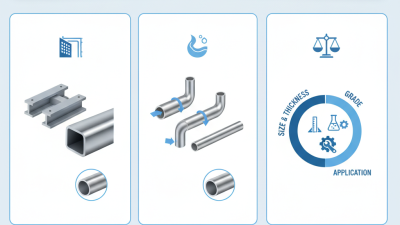
Choosing a top stainless steel pipe supplier requires more than comparing prices. Experienced buyers examine material certificates, heat numbers, and production records. These documents should match the pipe bundle and test results. Check whether the supplier controls chemical composition, outside diameter, wall thickness, and surface finish. Independent inspections can confirm these details before shipment.

Ask for practical evidence, not polished promises. A reliable supplier should explain testing methods, inspection frequency, packaging, and traceability procedures. Request sample certificates and recent quality reports. Verify production capacity against your required schedule. A supplier may claim fast delivery, yet struggle with unusual sizes or strict tolerances. I have found that clear technical communication often reveals more than a sales presentation.

Tips: Compare three suppliers using the same specification sheet. Confirm applicable standards, pressure testing, PMI testing, and export documents. Visit the facility when possible, or arrange a third-party audit. Review how complaints are handled. Small delays in replies can become larger problems later. Cost still matters, but the cheapest offer may create rework, rejected shipments, or uncertain performance. One weakness deserves attention: even a careful evaluation cannot predict every production issue, so written quality agreements remain essential.

Leading Stainless Steel Pipe Suppliers and Their Product Strengths

For global buyers in 2026, stainless steel pipe suppliers compete on more than price. Their strongest advantage is product fit. Seamless pipe suits pressure service. Welded pipe supports larger diameters. Sanitary tubing requires smooth internal surfaces and clean welds. Reliable suppliers explain these differences before quoting. They should confirm grade, outside diameter, wall thickness, length, finish, and end preparation. Fit matters. This discipline reduces costly mismatches during installation.

Product strength also depends on controlled manufacturing. Buyers should request traceable heat numbers, material certificates, dimensional reports, and documented non-destructive testing. For corrosion-sensitive projects, qualified engineers should review chemical composition and pitting resistance requirements. A capable supplier can discuss solution annealing, pickling, passivation, and surface roughness clearly. Vague technical language deserves caution. Details matter.

Delivery reliability separates experienced suppliers from ordinary exporters. Realistic lead times, protective packaging, and loading inspections help prevent avoidable losses. Sealed ends, wooden supports, and moisture-resistant wrapping protect pipes during ocean transport. Still, no supplier is perfect. A certificate may be accurate while packaging fails. Independent inspection can be worthwhile for critical orders. Buyers should assess response quality, traceability, and corrective action, not only catalog breadth. A supplier’s willingness to admit limitations can reveal more than polished sales claims.

2026 Top Stainless Steel Pipe Suppliers for Global Buyers - Leading Stainless Steel Pipe Suppliers and Their Product Strengths
Supplier Capability Profile Primary Product Range Common Stainless Steel Grades Applicable Product Standards Typical Size Coverage Surface and Finish Options Main Product Strengths Typical Global Applications Key Buyer Verification Points
Mill-Integrated Seamless Pipe Producer Seamless process pipe
High-pressure tubing
Heat-exchanger tubing
304/304L 316/316L 321 347 ASTM A312
ASTM A213
ASTM A269
ASME SA specifications where applicable
Commonly supplied from small tubing sizes to large process-pipe sizes; exact limits depend on grade, wall thickness, and manufacturing route. Annealed and pickled
Bright annealed
Mechanically polished
No longitudinal weld seam; suitable for demanding pressure, temperature, and corrosion-service requirements. Chemical processing, power generation, heat exchangers, instrumentation, and high-purity process systems. Confirm heat numbers, solution-annealing records, hydrostatic or nondestructive testing, dimensional tolerances, and material test reports.
Large-Diameter Welded Pipe Producer Longitudinally welded pipe
Large-diameter process pipe
Fabricated pipe sections
304L 316L 321 Duplex grades ASTM A312
ASTM A358
ASTM A778
EN 10217-7
Usually selected for medium to very large outside diameters; wall thickness and length are made to project requirements. Pickled and passivated
Brushed
Polished
External coating when specified
Efficient production of large diameters, broad customization potential, and strong suitability for engineered piping systems. Water treatment, desalination, food processing, petrochemical facilities, architectural structures, and industrial utilities. Check weld procedure qualifications, weld inspection method, radiographic or ultrasonic testing, ovality, straightness, and end preparation.
Decorative and Sanitary Tube Specialist Ornamental tube
Sanitary tube
Handrail and structural tube
Furniture and fabrication tube
201 304 304L 316L ASTM A554
ASTM A270 for sanitary tubing
EN 10357 for hygienic applications
Commonly available in round, square, rectangular, and oval profiles with light to medium wall thicknesses. Mill finish
Satin finish
No. 4 finish
No. 8 mirror finish
Decorative colored finishes
Consistent appearance, tight dimensional control, clean internal surfaces, and broad profile availability. Food and beverage equipment, commercial kitchens, elevators, balustrades, architectural interiors, and medical facilities. Confirm weld-bead treatment, internal roughness for hygienic service, finish consistency, protective film, and cleaning or passivation procedures.
Hygienic Process Tubing Supplier Sanitary pipe
Orbital-welding tube
Clean-in-place piping components
Hygienic fittings
304L 316L 316L low sulfur ASTM A270
ASME BPE
EN 10357
ISO 2037
Typically supplied in standardized hygienic tube dimensions with controlled wall thickness and high dimensional repeatability. Internal mechanical polish
Electropolished
Bright annealed
Passivated
Low surface roughness, cleanability, corrosion resistance, and compatibility with hygienic welding systems. Dairy, beverage, pharmaceutical, biotechnology, cosmetics, and semiconductor-related process systems. Request internal roughness values, surface certificates, sulfur range, ferrite data where relevant, orbital-welding compatibility, and cleanliness documentation.
Duplex and Super Duplex Specialist Seamless and welded pipe
Tubes and fittings
Corrosion-resistant process components
2205 duplex 2507 super duplex Lean duplex ASTM A790
ASTM A789
ASTM A928
EN 10216-5 and EN 10217-7 where applicable
Available from tubing sizes to large process-pipe dimensions, subject to forming, heat treatment, and testing requirements. Solution annealed
Pickled and passivated
Machined or polished ends
Higher resistance to chloride stress-corrosion cracking and pitting than many conventional austenitic grades, with high mechanical strength. Offshore platforms, desalination, marine systems, chemical processing, pulp and paper, and demanding water applications. Verify phase balance, solution-annealing temperature, ferrite measurement, impact testing where required, corrosion testing, and PMI results.
Nickel-Alloy and High-Temperature Tube Supplier High-temperature tubing
Heat-resistant pipe
Corrosion-resistant alloy pipe
310/310S 904L Nickel alloys High-alloy grades ASTM B163
ASTM B165
ASTM B407
ASTM B619/B626 where applicable
Usually produced to engineered orders with size, wall thickness, heat treatment, and testing defined by the service conditions. Annealed and pickled
Bright annealed
Machined finish
Controlled internal finish
Enhanced resistance to high temperature, oxidation, reducing or oxidizing media, and severe chemical environments. Furnaces, heat-treatment equipment, chemical plants, power generation, flue-gas systems, and high-temperature processing. Confirm alloy chemistry, heat-treatment records, creep or tensile requirements, corrosion-test requirements, and traceability to the original melt.
Stockist and Project Distributor Standard seamless and welded pipe
Fittings and flanges
Cut-to-length services
Project consolidation
304/304L 316/316L 321 Duplex ASTM and ASME dimensional systems
EN standards
DIN-based dimensions where specified
Broad availability of standard outside diameters, schedules, lengths, fittings, and flange dimensions from warehouse inventory. Mill finish
Pickled finish
Polished finish
Protective packaging for export
Fast availability, mixed-size consolidation, lower minimum order quantities, and simplified project procurement. Maintenance, repair and operations, plant construction, water treatment, food equipment, and general industrial fabrication. Check original mill certificates, current stock status, heat traceability, country of origin, export packing, dimensional inspection, and replacement policy.
Precision Instrumentation Tubing Supplier Instrumentation tube
Hydraulic tube
Control-line tube
Coiled tubing
304/304L 316/316L 316L seamless ASTM A269
ASTM A213
ASTM A632
Project-specific tubing specifications
Small outside diameters, thin and medium walls, tight tolerances, long lengths, and coiled configurations where suitable. Bright annealed
Pickled
Cleaned and capped
Electropolished for selected applications
Tight dimensional tolerances, low leakage risk, clean surfaces, and reliable compatibility with compression fittings. Instrument panels, analytical systems, hydraulic controls, gas distribution, laboratory equipment, and process measurement. Confirm hardness, ovality, wall-thickness tolerance, surface cleanliness, eddy-current testing, pressure testing, and end-cap protection.
Product capabilities, standards, and size ranges are typical market categories. Final selection should be based on the applicable design code, service medium, temperature, pressure, corrosion conditions, inspection plan, and project specification.

Quality Standards, Certifications, and Manufacturing Capabilities

For global buyers, stainless steel pipe quality starts with traceability, not polished photographs. The World Steel Association reported 1.88 billion tonnes of crude steel production in 2024. The International Stainless Steel Forum recorded more than 62 million tonnes of stainless production that year. Such scale makes supplier verification essential.

A capable manufacturer should provide heat numbers, material test certificates, chemical analysis, tensile results, and dimensional records. Common specifications include ASTM A312, ASTM A358, EN 10216, and EN 10217, depending on service conditions. ISO 9001 supports controlled production systems, while ISO 14001 and ISO 45001 indicate environmental and occupational controls. For pressure applications, buyers should also examine third-party inspection reports and applicable ASME requirements. Certificates alone are not enough.

Manufacturing capability shows in the details. Ask whether the supplier controls tube forming, welding, solution annealing, pickling, passivation, and non-destructive testing in-house. A reliable factory can explain its ultrasonic, eddy-current, radiographic, or hydrostatic testing process without hesitation. Surface finish should match the drawing, not a vague “premium” claim. Poorly protected pipe ends can arrive scratched after a long sea voyage. That happens. It deserves attention.

Buyers should compare audit findings, not only prices. A supplier may meet one standard and still lack capacity for urgent, multi-country orders. Witnessing a production run, checking random bundles, and reviewing corrective-action records often reveal more than a certificate folder.

Pricing, Export Services, and Supplier Selection Considerations

For global buyers, stainless steel pipe pricing in 2026 depends on grade, outside diameter, wall thickness, finish, and order volume. A polished 316L pipe usually costs more than a standard 304 pipe because alloy content and finishing work raise production expenses. Freight, packaging, inspection, and currency changes also affect the final landed cost. Request a detailed quotation, not only a price per ton.

Export service can determine whether a competitive offer remains practical. Experienced suppliers should provide mill test certificates, dimensional reports, packing photographs, and traceability records. Confirm their experience with your destination’s documentation, labeling, customs, and delivery requirements. Container loading should protect pipe ends and surfaces. Small details matter. A missing certificate can delay installation and create unexpected storage fees.

Tips: Compare at least three comparable quotations. Check production capacity, response time, payment terms, and realistic lead times. Ask for a sample inspection or independent testing when quality is critical. Video audits can help, but they are not complete proof. I have found that buyers sometimes focus too heavily on the lowest unit price and overlook rejected batches, weak packaging, or unclear warranty terms. That choice can become expensive. Keep specifications written in one document, including tolerances, testing standards, surface requirements, and acceptable substitutions. Suppliers should answer precisely, even when the answer is inconvenient.

2026 Stainless Steel Pipe Grade Benchmark for Global Buyers

Minimum specified room-temperature mechanical properties by commonly procured stainless steel pipe grade. Higher strength can support demanding applications, but corrosion resistance, dimensions, certifications, lead time, and export documentation should also be evaluated.

Values shown in MPa. Source: ASTM A312 and ASTM A790 minimum specified mechanical properties; requirements may vary by product form, grade, and standard edition. Confirm the applicable standard with the supplier before purchasing.