How to Choose the Right Steel Pipe for Your Project in 2026?
Choosing the right steel pipe for your project in 2026 is crucial for success. The global steel pipe market is projected to reach $120 billion by 2026, showing a significant growth. A notable expert in the field, Dr. Emily Zhang, commented, “Selecting the ideal steel pipe can significantly impact project efficiency and safety.”
When considering steel pipes, various factors come into play. The material's durability, corrosion resistance, and weight are vital. Recent industry reports indicate that high-strength steel pipes are increasingly preferred for their ability to withstand extreme conditions. While many options exist, the wrong choice can lead to costly delays and safety concerns.
Understanding the unique requirements of your project is essential. Not every steel pipe serves the same purpose. Misjudgments can hinder progress. Engaging with suppliers who provide detailed specifications and expert advice can clarify the choices. In this evolving market, ensuring reliability and efficiency in your choice of steel pipe is more important than ever.

Understanding the Different Types of Steel Pipes Available in 2026
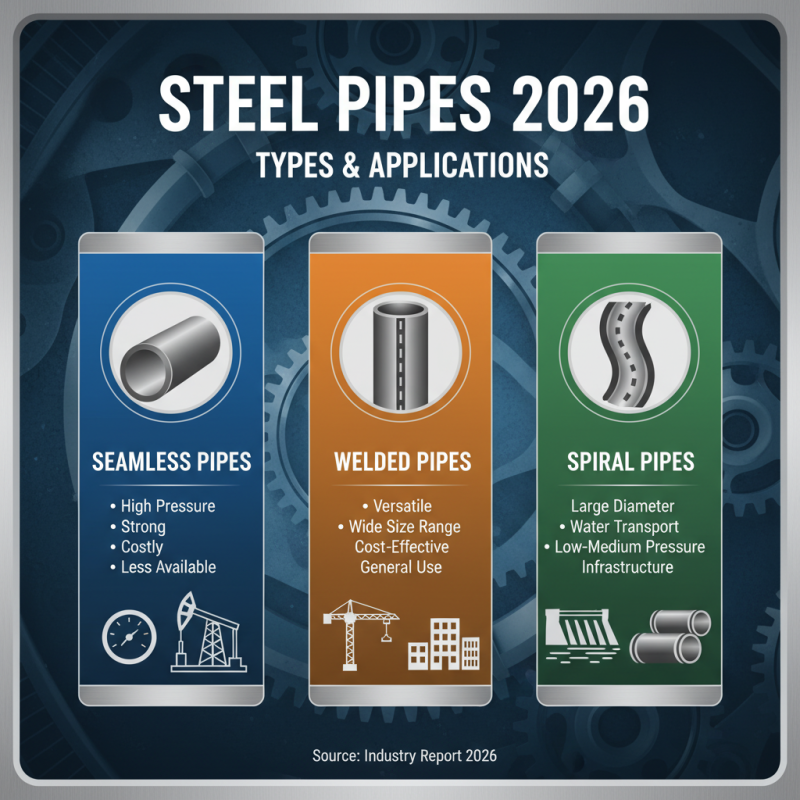
When considering steel pipes for your project in 2026, it’s essential to understand the types available. There are three main categories: seamless, welded, and spiral pipes. Each type serves distinct purposes based on pressure, size, and applications. Seamless pipes are strong and ideal for high-pressure applications. However, they can be costlier and less readily available.
Welded pipes, meanwhile, offer versatility and can be produced in long lengths. They tend to be more affordable, which could be beneficial depending on your project budget. Yet, their welded seams may influence their performance under stress. Spiral pipes, often used for large diameter applications, can present challenges. The manufacturing method can introduce variability in strength. Not every project will benefit from their use.
Choosing the right pipe requires careful consideration of material specifications, intended use, and environmental factors. The quality of steel, thickness, and coating can significantly impact longevity and safety. Sometimes, the ideal choice may not be the obvious one. Exploring all options and understanding their limitations can ensure that you select the most suitable pipe for your needs.
Analyzing Project Requirements and Pipe Specifications
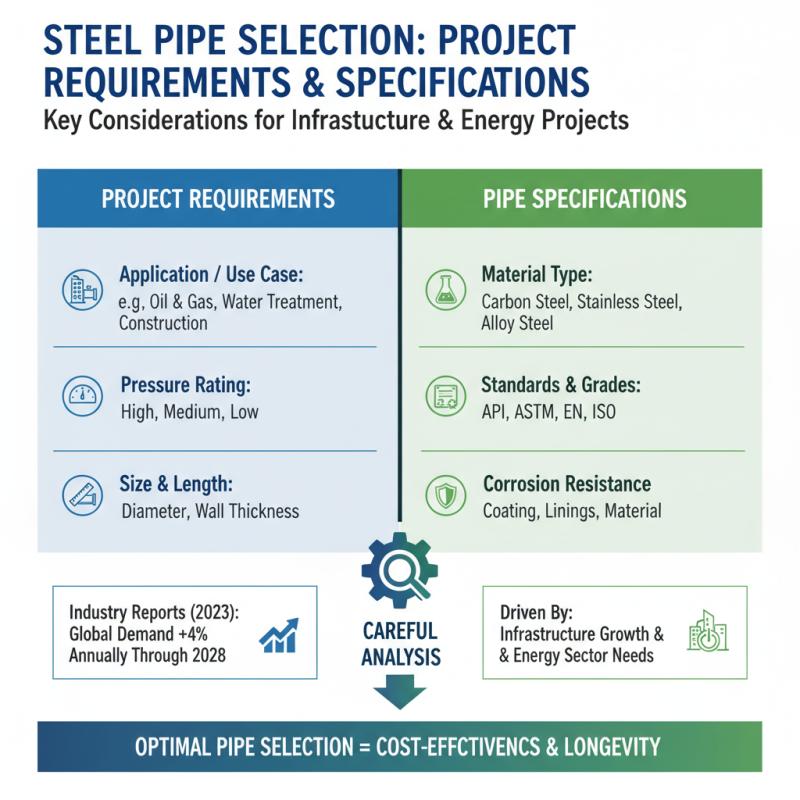
Choosing the right steel pipe for a project requires a careful analysis of both project requirements and pipe specifications. Start by understanding the specific application. Different projects demand different types of steel pipes based on pressure ratings, size, and material properties. According to industry reports, the global demand for steel pipes is expected to grow by 4% annually through 2028. This growth is attributed to increased infrastructure projects and energy sector needs.
Consider the environment where the pipes will be used. For instance, corrosive environments may necessitate the use of stainless steel or coated pipes. A 2021 study indicated that failure rates in poorly selected pipe materials could increase maintenance costs by up to 25%. It’s essential to balance cost and durability.
**Tips:**
Always consult industry standards, such as ASTM and API specifications. Assess the long-term implications of your pipe choices. Regular reviews of supplier reliability can enhance project outcomes. A common error is overlooking these critical specifications, leading to inflated costs or project delays. Quality materials matter, but so does proper application.
Evaluating Quality Standards and Certifications for Steel Pipes
When selecting steel pipes for your project, quality standards and certifications play a crucial role. The American Society for Testing and Materials (ASTM) outlines essential standards for pipe manufacturing. The ASTM A53 standard, for instance, ensures that pipes meet specific mechanical properties and chemical requirements. Reports indicate that adherence to these standards can enhance project safety and longevity.
Another significant certification to consider is the ISO 9001. This certification reflects a commitment to quality management practices. A study from the American Institute of Steel Construction highlighted that 70% of projects benefiting from certified suppliers experienced fewer delays. This underlines the importance of selecting reputable suppliers who comply with recognized quality standards.
Additionally, bridging the gap between compliance and application can sometimes be challenging. Inconsistent practices among vendors may lead to variability in product quality.
Always verify certifications and quality marks before making a purchase. Look for third-party validation to ensure accountability. Recognizing that not all suppliers consistently uphold these standards can be disheartening. However, conducting thorough research and site visits can mitigate risks. Ultimately, informed decisions on steel pipes hinge on understanding these vital quality benchmarks.
Considering Environmental Factors and Sustainability in Pipe Selection
When selecting steel pipes, environmental factors are increasingly crucial. Steel production is resource-intensive. It contributes to significant greenhouse gas emissions. Thus, considering sustainability becomes essential for project viability.
Opt for pipes made from recycled materials. These options reduce energy consumption and lower overall environmental impact. Assess the life cycle of each pipe. Consider how production methods affect the planet. Some may use more energy but offer greater durability. Reflect on the trade-offs involved in your choices.
It is important to stay updated on sustainable practices. Innovations in the industry happen frequently. Look for certifications that indicate eco-friendly manufacturing. Collaborate with suppliers who prioritize sustainability. This ensures your project aligns with environmental goals, even if it poses complex decisions. Every choice you make can contribute to a greener future.
Budgeting and Cost Analysis for Your Steel Pipe Project in 2026
When planning a steel pipe project in 2026, budgeting is crucial. Understanding material costs, labor, and other expenses will help shape your financial outline. Each of these factors can significantly impact your overall budget. For instance, raw material prices can fluctuate based on global demand and production rates. Staying informed about these trends will guide your financial decisions effectively.
Tips: Research local suppliers for better pricing. Compare quotes to identify the best deals. Consider potential delivery costs and start early to avoid rush fees. You’ll find minor savings can add up over time.
Also, factor in unexpected expenses. Delays can occur due to various reasons, leading to additional costs. Plan for contingencies to ensure you stay within budget. This can include setting aside a certain percentage of your total budget for unforeseen circumstances.
Remember, accuracy in your projections is key. Revisit your cost analysis regularly and adjust as needed. An initial rough estimate might evolve, so keep your records updated. Continuous reflection on your budget will highlight areas for improvement or where you may need to cut costs.
How to Choose the Right Steel Pipe for Your Project in 2026? - Budgeting and Cost Analysis for Your Steel Pipe Project in 2026
| Pipe Type |
Diameter (inches) |
Length (feet) |
Unit Cost ($) |
Total Cost ($) |
| Seamless Steel Pipe |
2 |
20 |
15 |
300 |
| Welded Steel Pipe |
4 |
30 |
10 |
300 |
| Carbon Steel Pipe |
6 |
25 |
12 |
300 |
| Galvanized Steel Pipe |
8 |
15 |
18 |
270 |
| Stainless Steel Pipe |
10 |
10 |
25 |
250 |