2026 Top Color Coated Coil Manufacturers for Global Buyers
Color Coated Coil is a finished steel product, but buyers should look beyond surface color. Substrate thickness, coating system, paint type, and production consistency all affect performance. World Steel Association reported global crude steel production of 1,882.6 million tonnes in 2024. That figure describes the wider steel industry, not color-coated coil demand. Still, it shows the scale of the supply chain behind every coil, from steelmaking to slitting and packaging. A glossy sample is useful. It is not enough.
For global buyers, comparing manufacturers means checking verifiable details: technical data sheets, coating and paint specifications, thickness tolerances, test methods, and batch traceability. EN 10169 provides a relevant framework for continuously organic-coated steel flat products; buyers should confirm which requirements apply to their intended use. Ask how suppliers control color variation between production lots, protect coil edges, and prevent damage during shipping. These details matter when coils are unwrapped at a busy fabrication line, not just when they look neat in a warehouse.
The 2026 manufacturer landscape is not a simple ranking. Capacity, export experience, response time, and documented quality systems can matter as much as quoted price. A low offer may be reasonable, or it may leave important specifications unclear. Buyers should request current evidence and compare like with like. No supplier is perfect. Careful questions make the differences easier to see.
Color-Coated Coil Basics: EN 10169, ASTM A755/A755M, and Product Types
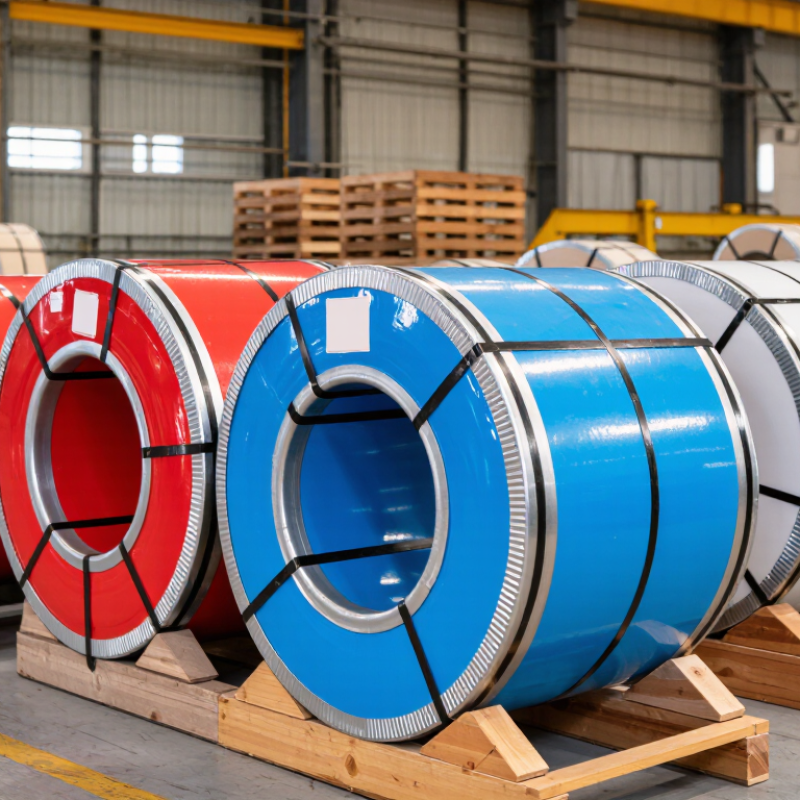
EN 10169 covers continuously organic-coated steel flat products, commonly called coil-coated steel. It helps buyers compare coating performance, appearance, and intended exposure. ASTM A755/A755M addresses prepainted metallic-coated steel sheet for building products used in exterior environments. The standards are useful reference points, not promises of identical service life. Exposure still matters.
A coil may use a galvanized or other metallic-coated steel substrate, followed by primer and a colored topcoat. Product types vary by substrate, coating system, finish, and intended use. A smooth panel for a sheltered wall may not suit a sun-exposed roof with frequent condensation. Check the applicable standard edition, coating designation, metal coating mass, paint system, and specified test results. Details matter.
Ask suppliers how the coating performs under the project’s actual conditions, including UV exposure, humidity, and cut-edge contact. Confirm that samples match the stated color and gloss; lighting can make the same finish look different. Not every buyer requests enough documentation. That can be costly. I would also compare forming requirements, because tight bends may stress a coating, even when the flat sheet looks flawless.
Buyer-Critical Specs: Gauge, Width, Paint System, and Z275 Substrates (275 g/m²)
2026 Top Color Coated Coil Manufacturers for Global Buyers
A coil quote is only useful when its dimensions match the part. Specify base-metal thickness, not just “gauge,” because gauge labels can vary by market and material. State width in millimetres, plus acceptable tolerances and coil weight. A narrow slitting plan can turn a small width mismatch into scrap. It happens.
Paint choice should follow the forming process and exposure. EN 10169 sets requirements for organic-coated steel products, but the coating system still needs a project-specific specification. Record primer and topcoat types, dry-film thickness, colour reference, and the intended face. A common topcoat range is 20–25 μm; confirm it against the supplier’s technical data sheet. Deep bends, cut edges, and coastal air can expose weaknesses that a colour sample will not show.
For zinc-coated substrate, EN 10346 defines Z275 as a nominal 275 g/m² coating mass across both faces—not 275 g/m² per side. Ask for the inspection certificate and verify the designation, thickness, and surface condition on arrival. ASTM A653/A653M provides a useful cross-check: its G90 designation is approximately 275 g/m² total. Close, but standards and test methods are not interchangeable. Buyers should confirm the governing specification before approving production.
2026 Top Color Coated Coil Manufacturers for Global Buyers
Buyer-Critical Specs: Gauge, Width, Paint System, and Z275 Substrates (275 g/m²)
The chart compares selected Z coating-class designations by nominal zinc coating mass across both sides of the steel sheet. Z275 denotes 275 g/m² in total, not 275 g/m² per side. For comparable coil quotations, also specify base-metal thickness and tolerance, ordered width and tolerance, and the paint system and coating thickness required for the intended application.
Reference: EN 10346 coating-class designations. Values shown are nominal coating masses for the complete coated sheet.
How to Assess 2026 Manufacturers: Capacity, Certifications, and Export Reach
Assess a color coated coil manufacturer by checking what its stated capacity means in practice. A large annual figure may include lines running at different speeds or products unlike yours. Ask for recent output, typical order size, and lead time for your required thickness, width, coating, and color. Paper proves little. A production schedule, sample coil, and clear explanation of quality checks offer better evidence. If possible, compare a trial order with the quoted specifications.
Certifications should match the actual plant, product, and process. Check issuing bodies, validity dates, and the certified scope rather than accepting a logo on a brochure. Request inspection records for coating thickness, adhesion, and surface appearance. These details can reveal whether checks happen consistently or only at dispatch. That matters.
Export reach is more than a list of destinations. Ask which ports the supplier regularly serves, how coils are protected against moisture, and who prepares packing lists and mill test documents. Confirm how claims are handled across time zones, and whether delivery estimates include transport and customs procedures. A reliable exporter should explain delays plainly. No checklist removes judgment; even a careful review can miss a weak production month, so keep initial orders manageable.
Global Manufacturer Profiles: Product Range, Target Markets, and Quality Systems
A useful 2026 comparison of color coated coil manufacturers starts with the product range. Check available base metals, coating types, thicknesses, widths, and surface finishes. These details affect forming, appearance, and service life. Ask whether samples match the proposed production specification. A small color difference can stand out across a large roof or wall.
Manufacturer profiles should also identify target markets and explain how products suit different climates and applications. Coastal exposure, strong sunlight, and frequent temperature changes can place different demands on a coating. Quality systems matter too. Look for documented inspections, batch traceability, and clear test methods. A polished brochure can still leave gaps. Request recent test records and clarify what happens when a batch falls outside agreed tolerances.
Tips: Compare technical data sheets line by line. Confirm coil dimensions, coating specifications, packaging, and inspection records before ordering. Ask how claims are handled. Not every supplier explains this clearly, and that deserves a second look.
Supplier Qualification: Test Reports, Warranty Terms, Lead Times, and Total Cost
For global buyers, supplier qualification starts with evidence, not polished sales language.
Request test reports tied to the exact coating system, substrate grade, thickness, and production batch. Check whether the report identifies test methods and dates. A tidy PDF is not proof that the tested coil matches your order. Details matter.
Ask for sample panels or a trial coil when appearance and forming performance are critical. Compare color, gloss, coating thickness, adhesion, and bend results against your written specification. Clarify warranty coverage in plain terms: what defects qualify, how claims are documented, and who pays for inspection or replacement freight. A long warranty can still leave important gaps.
Lead times should include production, inspection, packing, and transit—not just the mill schedule. Ask for realistic dispatch windows and updates if raw materials or port bookings shift. Delays happen. Compare total landed cost, including tooling, protective packaging, inland transport, duties, and likely scrap during forming. The cheapest quote may hide costs that appear only after arrival. I would also record unanswered questions; suppliers do not always provide complete data on the first request, and that deserves a follow-up before approval.