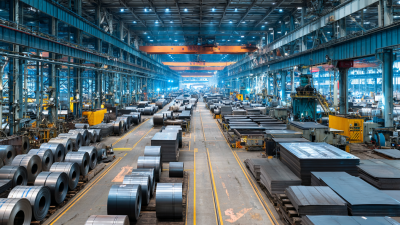
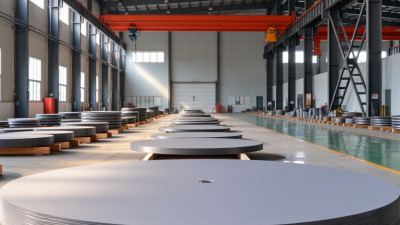
Choosing the right Steel Plate in 2026 requires more than comparing thickness and price. Buyers now examine strength, corrosion resistance, weldability, surface finish, and documented supply. This introduction explores the plate types most relevant to construction, energy, transport, heavy equipment, and marine projects. The choice matters.
Carbon steel plate remains widely used because it offers dependable performance and competitive cost. High-strength low-alloy plate supports lighter structures without sacrificing load capacity. Stainless steel plate serves demanding environments where moisture, chemicals, or hygiene create additional risks. Abrasion-resistant plate protects buckets, liners, crushers, and truck beds from repeated impact. Pressure vessel and boiler plate require careful control of toughness, chemistry, and heat treatment.
Weathering steel may reduce painting needs in suitable outdoor conditions, but local exposure still matters. Offshore and shipbuilding plates demand reliable toughness, weld performance, and traceable inspection records. Aluminum plate is not steel, yet it sometimes enters comparison discussions because weight reduction changes design decisions. That distinction should remain clear.
Material standards such as ASTM, EN, and JIS help buyers compare grades consistently. Mill certificates, mechanical test results, heat numbers, and third-party inspection can strengthen purchasing confidence. However, certificates alone do not guarantee a suitable application. Fabrication methods, service temperature, joint design, and maintenance plans also influence performance.
Data can disagree. Market rankings vary by region, project type, and supplier capability. This overview therefore treats the “top” types as practical 2026 choices, not universal winners. Readers should verify current standards and consult qualified engineers before specifying a final grade.
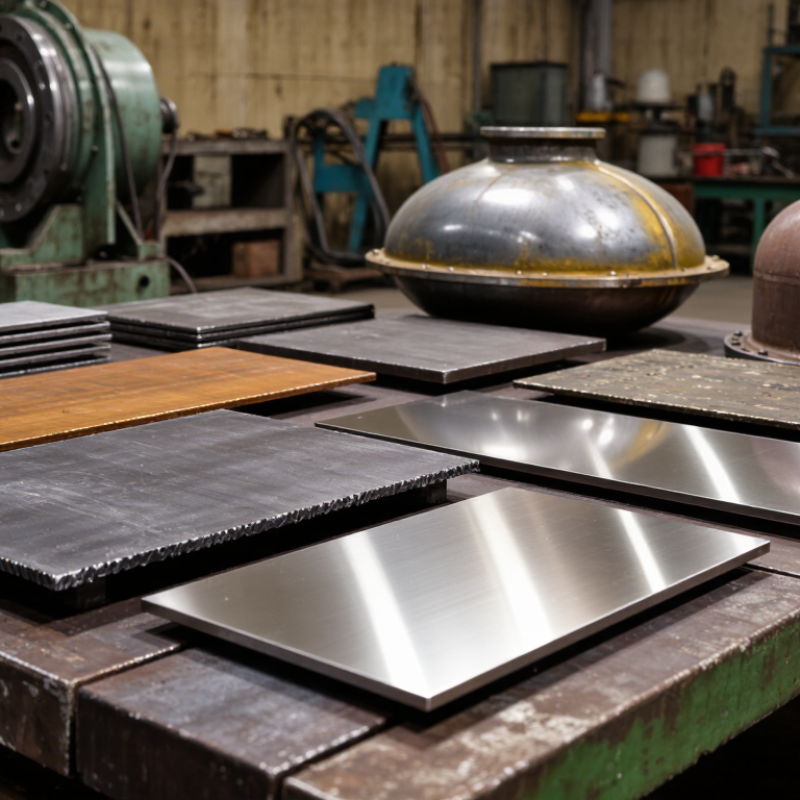
In 2026, steel plate types are classified by chemistry, strength, thickness, surface, and end use. Grade names alone are not enough. Carbon plate suits structural frames and general fabrication. Alloy plate adds elements such as chromium, nickel, or molybdenum. These additions improve toughness, corrosion resistance, or heat performance.
Classification also follows recognized standards. ASTM, EN, and ISO systems define chemical limits, testing methods, dimensions, and delivery conditions. High-strength low-alloy plate supports bridges, cranes, and heavy equipment. Pressure-vessel plate requires controlled toughness and verified mechanical properties. Wear-resistant plate is selected for hoppers, chutes, and mining buckets. The boundary is not always clean. One plate can meet several categories.
Industry data shows why careful classification matters. The World Steel Association reported global crude steel production of about 1,885 million tonnes in 2024. The OECD’s steel market analysis continues to highlight excess capacity and cautious demand. Buyers therefore need traceable quality, not only low prices. A mill test certificate should confirm yield strength, tensile strength, impact results, thickness, and heat number. Missing details can create expensive rework.
Tips: Match the plate to its working environment. Check temperature, load, welding method, and exposure to water or chemicals. Ask for the exact standard and edition. A small label may hide a major difference. Personally, I would also verify the certificate against independent testing when safety margins are narrow.
Carbon steel plate remains one of the most practical steel types in 2026. The USGS Mineral Commodity Summaries 2025 estimates global crude steel production reached nearly 1.9 billion metric tons in 2024. That scale reflects continuing demand for structural, industrial, and energy applications.
Carbon content influences strength, weldability, and forming behavior.
ASTM A36 plate offers a minimum yield strength of 36 ksi and suits frames, brackets, platforms, and general fabrication.
A572 Grade 50 raises minimum yield strength to 50 ksi, reducing weight in bridges, building frames, and heavy equipment. A516 Grade 70 provides strong tensile performance for pressure vessels and storage tanks. These figures are useful, but they are not the whole decision.
A grade table alone can mislead. It bends first.
Engineers should check thickness, impact requirements, temperature, welding procedure, and mill-test results. Higher strength may reduce plate weight, yet it can complicate forming and welding.
Outdoor structures also need coating or corrosion-control planning.
Real projects often fail through poor specification details, not weak steel.
Carbon steel plate is economical and versatile, but its performance depends on the environment and fabrication process. Source references include USGS Mineral Commodity Summaries 2025 and ASTM material specifications.
What Are the 2026 Top Types of Steel Plate?
Alloy steel plate is engineered, not merely upgraded carbon steel. Its composition may include chromium, nickel, molybdenum, manganese, silicon, or vanadium. Each element changes hardenability, toughness, corrosion resistance, or weldability. Small chemistry changes matter. The World Steel Association’s World Steel in Figures 2025 reports 1,882.6 million tonnes of crude steel production in 2024. This enormous volume includes many alloy grades, but production scale does not guarantee the right plate for a project.
Strength depends on chemistry and heat treatment. Quenching and tempering can produce a hard surface and a tougher internal structure. Under EN 10025-6, common quenched-and-tempered structural grades provide minimum yield strengths from 550 to 960 MPa. Those values are useful, but they are not the whole story. Plate thickness, notch toughness, hydrogen control, and welding heat input can change field performance. A specification that looks perfect on paper may still fail during fabrication.
In practical applications, low-alloy high-strength plate supports cranes, bridges, trailers, and heavy machinery. Chromium-molybdenum plate suits elevated-temperature equipment and demanding pressure systems. Wear-resistant alloy plate protects buckets, chutes, and mining liners from repeated abrasion. On a fabrication floor, weldability often matters more than maximum strength. ISO and EN test requirements improve reliability, yet inspection records still deserve careful review. Heat number, impact-test temperature, delivery condition, and actual thickness should match the purchase documents. Industry data helps, but it cannot replace disciplined material verification.
Representative alloy steel plate categories and commonly specified engineering characteristics
| Alloy Steel Plate Type | Typical Alloying Composition | Typical Mechanical Strength | Key Performance Characteristics | Common Applications |
|---|---|---|---|---|
| A514-Type Quenched and Tempered Plate | Low-carbon alloy steel with manganese, chromium, molybdenum, and small additions of nickel or boron depending on the specification. | Yield strength: approximately 690 MPa minimum Tensile strength: approximately 760–895 MPa |
High strength at relatively low weight; good weldability when preheating, hydrogen control, and approved welding procedures are used. | Heavy construction equipment, crane booms, bridges, structural frames, pressure-containing supports, and transportation equipment. |
| A517-Type Pressure-Vessel Alloy Plate | Low-carbon, quenched-and-tempered alloy steel containing manganese, chromium, molybdenum, and nickel in controlled proportions. | Yield strength: approximately 690 MPa minimum Tensile strength: approximately 795–930 MPa |
High strength-to-weight ratio and suitability for pressure-vessel construction; toughness and weldability depend on thickness and heat treatment. | High-pressure vessels, storage tanks, industrial boilers, gas equipment, and large welded process vessels. |
| 4130 Chromium-Molybdenum Plate | Approximately 0.28–0.33% carbon, 0.80–1.10% chromium, and 0.15–0.25% molybdenum, with manganese and silicon. | Yield strength: approximately 435–700 MPa Tensile strength: approximately 560–850 MPa |
Good strength, fatigue resistance, and hardenability; relatively weldable compared with higher-carbon alloy grades. | Aircraft structures, motorsport components, tubular frames, energy equipment, mechanical supports, and fabricated assemblies. |
| 4140 Chromium-Molybdenum Plate | Approximately 0.38–0.43% carbon, 0.75–1.10% chromium, and 0.15–0.25% molybdenum. | Yield strength: approximately 850–1,100 MPa Tensile strength: approximately 1,000–1,250 MPa |
High hardenability, wear resistance, fatigue strength, and toughness after suitable quenching and tempering. | Mining machinery, gears, shafts, pressure components, tooling, heavy-duty equipment, and high-load structural parts. |
| 4340 Nickel-Chromium-Molybdenum Plate | Approximately 0.38–0.43% carbon, 1.65–2.00% nickel, 0.70–0.90% chromium, and 0.20–0.30% molybdenum. | Yield strength: approximately 900–1,400 MPa Tensile strength: approximately 1,100–1,500 MPa |
Very high strength, deep hardenability, excellent fatigue resistance, and strong impact performance when properly heat treated. | Aircraft and defense structures, high-load shafts, landing-gear components, heavy machinery, and high-stress mechanical parts. |
| 2.25Cr-1Mo Pressure-Vessel Plate | Approximately 2.00–2.50% chromium and 0.90–1.10% molybdenum, with low carbon and controlled manganese and silicon. | Yield strength: approximately 240–310 MPa Tensile strength: approximately 450–620 MPa |
Excellent elevated-temperature strength, hydrogen resistance, and resistance to high-temperature oxidation compared with carbon steel. | Refinery reactors, petrochemical vessels, hydroprocessing equipment, high-temperature piping supports, and power-generation systems. |
| 9Cr-1Mo / Grade 91-Type Plate | Approximately 8–9.5% chromium, 0.85–1.05% molybdenum, with controlled additions of vanadium, niobium, nitrogen, and carbon. | Yield strength: approximately 415–620 MPa Tensile strength: approximately 585–760 MPa |
Strong creep resistance and oxidation resistance at elevated temperatures; requires strict heat-treatment and welding controls. | Power-plant boilers, superheater components, steam piping, energy-generation equipment, and high-temperature pressure systems. |
| Ni-Resistant Low-Temperature Alloy Plate | Low-carbon alloy steel with approximately 1.5–9% nickel, often combined with manganese and small amounts of chromium or molybdenum. | Yield strength: approximately 275–550 MPa Tensile strength: approximately 485–760 MPa |
Improved impact toughness and fracture resistance at sub-zero temperatures; suitable grades can maintain ductility in cryogenic service. | Liquefied-gas storage tanks, cryogenic vessels, low-temperature pipelines, offshore facilities, and refrigerated process equipment. |
| Abrasion-Resistant Alloy Plate | Medium-carbon alloy steel containing manganese, chromium, molybdenum, and sometimes boron; hardness is controlled through heat treatment. | Typical hardness: approximately 360–600 HBW Tensile strength: commonly above 1,100 MPa |
High resistance to sliding, impact, and gouging wear; increased hardness can reduce formability and require controlled fabrication. | Mining chutes, bucket liners, crushers, conveyors, recycling equipment, quarry machinery, and bulk-material handling systems. |
Technical note: Values are representative engineering ranges for commonly supplied heat-treated or normalized-and-tempered plate conditions. Actual chemistry, strength, hardness, impact toughness, weldability, and allowable thickness depend on the applicable standard, grade, plate thickness, heat treatment, and purchasing specification. Always verify the certified material test report and the governing design code before selection.
Stainless Steel Plate: Corrosion Resistance and Main Categories
In 2026, stainless steel plate remains a practical choice for wet, chemical, and high-temperature environments. Its protection comes from chromium, which forms a thin, self-repairing oxide film on the surface. This film is invisible but highly important. According to the International Stainless Steel Forum’s 2024 statistics, global stainless crude steel production reached about 62.6 million metric tonnes. That volume reflects broad demand across construction, transport, food processing, and energy equipment.
Austenitic plate, including 304 and 316 grades, offers strong corrosion resistance, good formability, and easy welding. Grade 316 performs better around chlorides because molybdenum improves pitting resistance. Ferritic grades, such as 430, cost less and resist oxidation well, but they usually provide lower toughness. Martensitic grades, including 410 and 420, support higher hardness after heat treatment. Duplex plate combines austenitic and ferritic structures, giving high strength with useful chloride resistance. It can reduce thickness in demanding structures.
Selection requires more than a grade name. Fabricators should check chloride levels, temperature, weld zones, surface finish, and drainage design. The AMPP IMPACT study estimated annual global corrosion costs near 3.4% of global GDP, showing why material decisions deserve careful review. Still, no stainless plate is corrosion-proof. Poor cleaning, trapped moisture, or contaminated tools can damage even a suitable surface. One detail is often missed. Real service conditions matter more than laboratory ratings.
In 2026, specialty steel plate is moving beyond simple strength ratings. High-strength plate helps reduce structural weight while supporting demanding loads. It is useful in bridges, lifting equipment, pressure vessels, and heavy transport frames. Engineers should check yield strength, tensile strength, weldability, and impact performance together. A high rating alone does not guarantee a reliable part.
Wear-resistant plate protects surfaces exposed to sliding, crushing, and repeated impact. Consider a mining chute with sharp stone striking its walls every few seconds. The right grade can extend service life and reduce shutdowns. However, hardness may complicate cutting, bending, and welding. Fabricators need controlled heat input, suitable procedures, and careful inspection. Small cracks can become expensive problems.
Smart steel options are also gaining attention. Some plates may include traceability data, embedded monitoring methods, or improved surface treatments. These features can help maintenance teams identify stress, corrosion, or unusual temperature changes earlier. Practical experience still matters. Sensors can fail, data can be misunderstood, and a digital system cannot repair poor design. I have seen projects focus heavily on material strength while overlooking drainage and joint details. That lesson remains important. Buyers should request mill certificates, testing records, dimensional checks, and clear installation guidance before approving specialty plate.
Representative specification values for high-strength, weather-resistant, wear-resistant, and stainless steel plate grades.
Quenched-and-tempered A514 plate provides the highest representative minimum yield strength in this comparison. AR400 is defined primarily by nominal Brinell hardness rather than a standardized yield-strength value, so it is shown on a separate axis. Actual properties vary by grade, thickness, heat treatment, and applicable specification.